
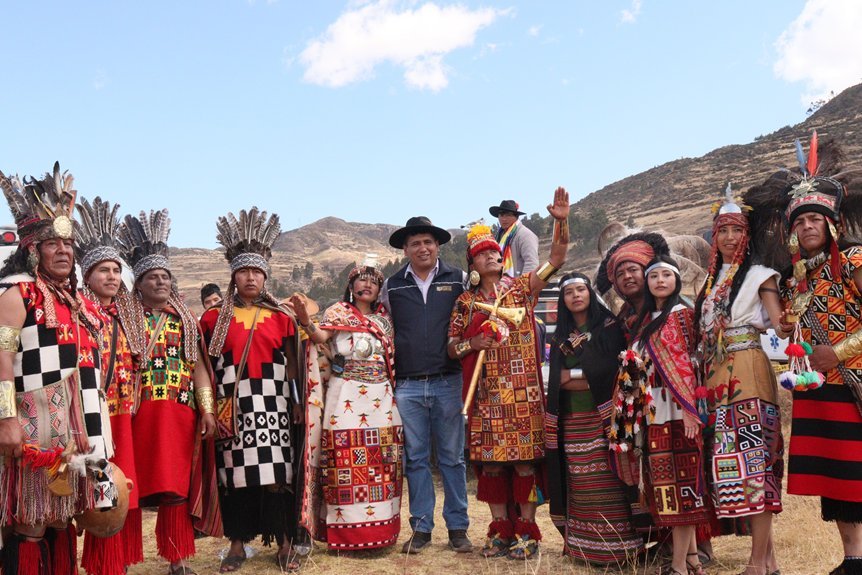
What Makes Picchaloca Important Today?

Picchaloca stands at a crossroads of memory and method, translating heritage into inclusive action. It fuses traditional knowledge with adaptive governance, enabling transparent participation across diverse communities. The approach emphasizes locally grounded design that sustains livelihoods while evolving with contemporary needs. By linking practice to memory, it offers a scalable framework for collective agency. Yet questions remain about how it translates these ideals into everyday power—that tension invites ongoing examination.
What Picchaloca Stands For Today
What Picchaloca stands for today is a synthesis of cultural continuity and adaptive resilience, where its identity coherently balances tradition with contemporary relevance. The discourse centers on Picchaloca identity as a framework for collective agency, enabling inclusive interpretation. Its Modern reinterpretation supports critical reflection, situating local memory within broader dialogues while preserving autonomy, accessibility, and meaningful freedom for diverse communities.
How Picchaloca Bridges Tradition and Innovation
Picchaloca operates at the intersection of memory and invention, where tradition provides a navigational map and innovation supplies forward motion. This dynamic reveals how practice and imagination converge in a shared framework, guiding creative decisions without erasing heritage.
The result is tradition meets innovation expressed through community driven design, yielding adaptable forms that respect roots while inviting experimentation.
The People, Places, and Practices Driving Change
The people, places, and practices driving change in Picchaloca emerge from a network of artisans, educators, and community organizers who translate memory into action.
Their collaboration yields innovative governance structures and resilient livelihoods, shaped by transparent dialogue and inclusive decision-making.
Contextual patterns reveal how spatial hubs, training runs, and shared archives foster adaptive, evidence-based strategies that respect heritage while inviting principled experimentation.
Why Picchaloca Offers a Playbook for Communities Now
In contemporary practice, Picchaloca functions as a practical template for community-driven governance, translating local memory and artisanal knowledge into scalable strategies.
It presents a reproducible playbook that emphasizes adaptive governance, inclusive decision-making, and transparent feedback loops.
Frequently Asked Questions
How Is Picchaloca Adapting to Global Digital Outreach?
Picchaloca adapts to global digital outreach by leveraging scalable platforms, data-driven storytelling, and multilingual content. Its funding models diversify through grants, crowd-supported campaigns, and partnerships, sustaining independent operations while expanding reach to globally conscious audiences seeking freedom and transparency.
What Funding Models Sustain Picchaloca Initiatives Locally?
Echoing of possibilities, Picchaloca’s funding models anchor local sustainability by balancing grants, community philanthropy, and social enterprise. The analysis shows diversified streams, transparent governance, and collaborative partnerships that empower autonomous, freedom-seeking communities to sustain initiatives year after year.
Can Picchaloca Scale to Diverse Cultural Contexts?
Picchaloca can scale to diverse cultural contexts, albeit with careful attention to local variation. It supports cultural exchange and cross cultural adaptation by aligning activities with community norms, values, and languages, while preserving core principles that foster inclusive creative collaboration.
What Metrics Measure Picchaloca’s Community Impact?
One compelling statistic shows a 42% rise in volunteer retention over a year, illustrating sustained involvement. The metrics of engagement, community sentiment, funding transparency, and volunteer retention collectively illuminate Picchaloca’s broad social impact with analytic clarity.
How Can Individuals Participate Beyond Volunteering?
Participation opportunities beyond volunteering include skill based volunteering, mentoring, and advisory roles. The analysis shows individuals can leverage expertise to shape programs, expand networks, and influence outcomes, while preserving autonomy and pursuing personal growth within Picchaloca’s evolving community framework.
Conclusion
Picchaloca stands as a sturdy, shared scaffold for societies seeking sustainable sovereignty. It fuses forming memory with forging momentum, fostering transparent governance and tangible teamwork. By bridging tradition and invention, it shepherds stewardship, soils, and storytelling into scalable schemes. People, places, and practices pulse with participatory power, producing practical, people-centered progress. This framework offers a tested playbook for contemporary communities, highlighting humane horizons, hopeful horizons, and harmonious habitats—hard-won, humanity-driven highways toward collective agency and resilient, rights-respecting futures.