
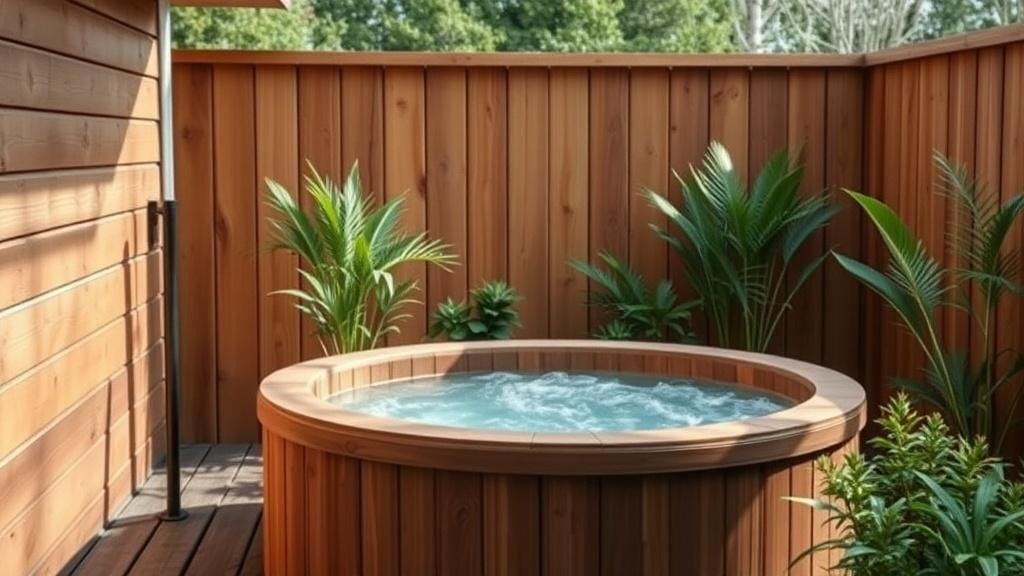
Cold Plunge: What to Know Before You Buy

Cold Plunge: What to Know Before You Buy is worth evaluating through the homeowner’s real week, not a perfect catalog photo. The best setup is the one that gets used, stays safe, and does not become a maintenance headache.
My neighbor Dave spent $6,200 on a cold plunge tub last October, set it on a patch of backyard grass, and ran the chiller cord through a kitchen window on a 40-foot extension cord. By Thanksgiving the grass had compressed into a mud bowl, the tub sat visibly tilted, and his breaker tripped every time his wife turned on the microwave. He loved the actual cold plunge part. He hated everything else about the project. And that, basically, is the whole story of buying a cold plunge: the product is the easy half. The site prep is where people blow it.
If you get the boring stuff right (pad, circuit, climate match), a home cold plunge is one of the few wellness purchases that actually holds up as a daily-use feature. Most residential setups land between $4,500 and $14,000 depending on tub material, chiller class, and filtration. The rest of this guide covers the specs that matter, what the research actually says, installation reality, costs, and the questions I hear most often.
Reading a Spec Sheet Without Getting Played
Every cold plunge listing leads with some combination of sleek photography and influencer testimonials. The spec sheet is the part that matters. Here is what to look at:
Tub volume and chiller match. Residential tubs typically hold 80 to 120 gallons. Chillers range from 1/3 HP to 1 HP. The relationship between them is the single most important spec. A 1/3 HP chiller can hold 50°F in a small, well-insulated tub in Portland. That same chiller in a Phoenix garage in August? It will run nonstop, burn through electricity, and still not hold temp. Always check the manufacturer’s sizing chart for your climate zone instead of trusting a Reddit thread.
Filtration and sanitation. Most quality home units combine ozone, UV, and a 5-micron filter cartridge. This combination keeps water clear for 6 to 12 weeks between full drains. Cheap units skip one or more of these layers, and you end up draining weekly or dumping chemicals.
Tub material. Insulated acrylic or fiberglass is the residential standard. Commercial-grade stainless steel is heavier, more durable, and roughly double the price. Stock-tank conversions (the $400 to $900 range) work, but you are hauling ice bags and managing water quality manually. Chest-freezer conversions are even cheaper but lack filtration entirely and are, to be honest, mechanically sketchy.
Oversizing vs. undersizing the chiller. An undersized unit runs continuously and shortens component life. An oversized one cycles hard and wastes energy. Neither failure mode is obvious at purchase. This is where the sizing chart earns its keep.
What the Research Actually Shows
Cold-water immersion research has moved past the anecdotal stage, though it still has real limits.
Heinonen and Laukkanen reviewed cold-water immersion outcomes in 2018 (Frontiers in Physiology) and reported reductions in self-reported muscle soreness, modest improvements in mood, and changes in catecholamine signaling after 2 to 5 minute immersions at 50°F to 59°F. “Modest improvements in mood” is doing a lot of work in that sentence, but the soreness findings are consistent enough across studies to take seriously.
A 2022 systematic review by Allan and colleagues (European Journal of Applied Physiology) examined cold-water immersion after resistance training and found recovery benefits, with one important caveat: very frequent cold immersions immediately after lifting may blunt some hypertrophy signaling. The practical takeaway for home users is straightforward. Keep cold sessions to 2 to 5 minutes, and if muscle growth is the priority, separate your plunge from heavy lifting by at least 4 hours.
The cardiovascular response deserves its own paragraph because people underestimate it. Cold exposure spikes heart rate and blood pressure within seconds. This is not a gentle intervention. Adults with arrhythmias, uncontrolled hypertension, Raynaud’s phenomenon, or who are pregnant need to clear cold immersion with a physician before any home use. Period.
For the broader context of contrast therapy (pairing sauna heat with cold immersion), the tradition runs through Scandinavian practice and Russian banya culture and is now standard in professional athletic recovery settings. A typical protocol is 10 to 20 minutes of sauna, 1 to 3 minutes of cold water at 50°F to 55°F, then 5 to 10 minutes of rest, repeated for 3 to 5 rounds. If you are building out a backyard wellness setup, this cold plunge & contrast therapy guide breaks down sizing, equipment, and install considerations across both sides of the equation. Worth bookmarking before you commit to any hardware.
See also: Trusted Business Line 0120822267 Professional Tech Support
The Install Nobody Wants to Talk About
The tub arrives on a pallet. You unbox it, fill it, plug it in. Easy. Except for everything underneath and behind it.
The pad. A full cold plunge tub with water and a steel or composite chassis puts 800 to 1,200 pounds on a small footprint. Dave’s grass patch was the worst-case scenario, but even loose gravel settles unevenly. A 4-inch compacted gravel pad with a drainage layer works for many backyard installs in stable soil. A 4-inch reinforced concrete pad is the right call on soft ground or anywhere with serious freeze-thaw cycles. Budget $400 to $900 for gravel, $1,200 to $2,400 for concrete. This is the least exciting line item in the project and the one most likely to save you from a redo.
The electrical run. Most residential cold plunge units run on a standard 110V outlet. The key requirements: GFCI protection, its own dedicated circuit, and a grounded outlet within a reasonable cord length. If the nearest outlet is more than 25 feet away or shares a circuit with high-draw appliances (like, say, a microwave), have a licensed electrician run a dedicated 20A 110V circuit. Some commercial-grade chillers require 240V, which always means a licensed electrician and, in most jurisdictions, a permit.
Water maintenance. Weekly pH and sanitizer testing. Drain and refill on the manufacturer’s schedule. This is not hard, but it is ongoing. People who skip it end up with cloudy water and biofilm, which is exactly as unpleasant as it sounds.
The Real Costs, Including the Ones You Forget
The sticker price on a cold plunge unit tells you maybe 60% of the story. Here is the fuller picture:
Residential insulated tub with integrated chiller: $4,500 to $7,500. Commercial-grade stainless build with full filtration: $9,000 to $14,000. Stock-tank DIY with manual ice: $400 to $900 (plus the ongoing cost and hassle of ice).
Pad work: $400 to $2,400 depending on material. Electrical run (if needed): $600 to $1,800 for 240V; less for a simple 110V dedicated circuit. First-year maintenance (filters, test strips, occasional chemicals): $100 to $250.
If you are also building out a sauna for contrast therapy, add $2,490 for an entry barrel kit up to $16,980 for a premium build, plus its own pad and electrical costs.
On resale value: appraisers do not add dollar-for-dollar return on a cold plunge or sauna, but a well-built outdoor wellness setup functions as a selling feature in Northeast and Pacific Northwest markets. Think of it like a fire pit or a hot tub. It does not appraise high, but it makes the listing photos better.
On HSA/FSA eligibility: some home wellness equipment can be reimbursed through HSA or FSA accounts when a Letter of Medical Necessity (LMN) is on file. Services like TrueMed issue LMNs after a clinician review for conditions where cold or heat therapy is a recognized treatment input. Eligibility is patient-specific and IRS rules are strict. Talk to your tax advisor before counting on this.
Purpose-Built vs. DIY vs. Chest Freezer
The honest comparison:
A purpose-built insulated tub with a 1 HP chiller holds 39°F to 45°F all day, no ice, no drama. You pay for that convenience. A stock-tank DIY build hits the same temperatures if you haul enough ice, but you are managing water quality yourself and refilling ice constantly. A chest-freezer conversion is the cheapest path, and I think it is the worst option for most people. No filtration, dubious waterproofing, and you are one failed seal away from a warranty-voided appliance leaking on your patio.
The right answer, almost always, is not the cheapest unit or the most expensive one. It is the setup that matches your climate, your available space, and the routine you will actually maintain three months from now when the novelty has worn off.
When to Call a Professional (Three Specific Moments)
One: the pad. Especially in freeze-thaw climates or on soft soil. A pad that settles after the tub is installed is exponentially more annoying (and expensive) to fix.
Two: the electrical. Any 240V work. Any situation where you are unsure about circuit capacity. Do not improvise with extension cords.
Three: a physician. If you have an arrhythmia, uncontrolled hypertension, a recent cardiac event, Raynaud’s phenomenon, are pregnant, or are managing any chronic condition, a 10-minute conversation with your doctor is the correct first step. The research is encouraging for healthy adults. That is not the same as universally safe.
FAQs
Can I run a cold plunge year-round in cold climates?
Yes, with caveats. Insulated tubs with integrated chillers handle below-freezing ambient temperatures if the chiller’s operating range supports it. Check the manufacturer’s spec sheet for low-temperature performance limits. Some units need a circulation timer to prevent freeze damage in pipes and lines.
What is the lifespan of a quality cold plunge?
Stainless-steel tubs last 15 to 20 years with basic care. Insulated acrylic or composite tubs are comparable. Chillers are typically replaced or rebuilt every 6 to 10 years, depending on usage and climate stress.
Do I need a permit for a cold plunge?
The tub itself usually does not require a building permit if it falls under your municipality’s threshold for detached structures. The electrical permit for a 240V circuit is almost always required. Call your local building department before ordering.
How long does it take a chiller to cool a fresh fill?
A cold-plunge chiller pulls a freshly filled tub from tap temperature down to 45°F in 3 to 8 hours, depending on chiller HP, tub volume, insulation quality, and starting water temperature.
How long should a typical cold plunge session last?
Most adults do well with 2 to 5 minutes at 40°F to 55°F. Build up gradually if you are new to cold immersion. Longer is not necessarily better, and the cardiovascular spike deserves respect, especially in the first few sessions.
Is a cold plunge better than an ice bath?
Physiologically, they produce a similar response at similar temperatures. The difference is convenience and consistency. A plunge with a chiller maintains temperature automatically; an ice bath requires purchasing, storing, and loading ice each session. Over time, the effort gap matters more than people expect.
Can I put a cold plunge on a deck?
Maybe. Decks need to support the loaded weight (800 to 1,200 lbs in a small footprint). Most residential decks are not engineered for that kind of point load. Have a contractor or structural engineer verify your deck’s capacity before placing a full tub on it.
Disclaimer. This article is general consumer information, not medical advice. Heat and cold therapies carry real cardiovascular load. Anyone with arrhythmias, uncontrolled hypertension, Raynaud’s phenomenon, recent cardiac events, or who is pregnant should consult a physician before starting any new sauna or cold-plunge routine.
HSA and FSA reimbursement on wellness equipment is patient-specific and depends on a Letter of Medical Necessity from a clinician. Talk to your tax advisor before assuming a purchase qualifies.